Showing posts with label design. Show all posts

Sunday, April 27, 2014

How Many Packs?

Springtime in Virginia: almost time for my annual service project in memory of my childhood friend, Lolly Winans, who was murdered in Shendandoah National Park on Memorial Day weekend back in in 1996, four years after I spent my year on the trail. Time to pack the overnight gear, shoulder the burden and head up to the Appalachian Trail to commune with this year's crop of thru hikers on their way north from Springer Mountain, Georgia. They'll be hungry; it has been a very cold spring.

Photo: Chad, trailname "Stick,"
courtesy sticksblog.com.
Like most outdoorsy types, I've got a few rucksacks. People ask how many. Here's what I carry on my back and what they're for.

Just remember that, as with clothes and shoes, packs are designed with model users in mind, and not all packs fit everyone well. Torso length, back breadth and the cut of the shoulder straps are the three main fit issues in backpacks.

Sometimes you have to rule out an entire manufacturer. Doesn't mean they don't produce tricked-out, high quality soft goods. Cold Cold World make some terrific alpine rucksacks, for instance, but they don't fit my body. Same with the super rugged crag packs by Mountain HardWear and Marmot. Obsessed with ultralight, I carried big heavy winter loads with an ultralight MontBell pack for a few years until I simply got fed up with the poor fit. I remember the day I had to give away my expensive, off-the-rack McHale Dyneema pack because it had been hell to carry on a couple trips in the Sierras. (Custom is the only way to go with acclaimed McHale, who are superb craftsmen, just like Feathered Friends who have the happy hand with custom down bags and apparel, and so I look forward to trying out a McHale rucksack again someday.)

Other times, certain lines just don't' feel right, while others fit like a glove. I've had this issue with both Patagonia and Black Diamond. So there's no substitute for trying on a fully weighted pack (loaded with your own gear) before you buy. And since this is such a hassle, just accept that you'll make a few mistakes before you settle on the perfect rucksack.

Packs and their uses are best laid out by size. Back when I trekked the Appalachian Trail, the standard volume measurement was cubic inches. The world has switched to liters now:

9 L Black Diamond Flash
The Patagonia Ascenionist
ready for Chamonix.
I bought the light grey
version because I like to
see what's inside.
Choose bright colors for
alpine routes. 
Basically an adventure racing or trail running pack. Barely enough room for water, snacks, essentials and a windbreaker or safety blanket. Light as a feather and disappears into your travel luggage. Great for running up the Sky Meadow blue blaze to the AT, cycling around the Mall, half days along the Hudson or rollerblading in Santa Monica.

20 L Black Diamond Bullet 
The breed standard climber's pack, this goes inside my crag pack or approach pack on rock and ice climbs. It has two haul loops, a whistle on the sternum strap, works with a water bladder and carries everything you need for a long day. Rugged, reliable, intuitive enough to give to your partner, stripped down. A bottomless pit. Can never work out why trad leaders need the bigger size.

32 L Black Diamond Sphinx 
My crag pack. Carries a full rack, rock & ice gear, helmet and a rope to the bottom of your route in addition to all your personal gear (stuffed inside the 20 L lead pack). The stiff lower back pad anchors the heavy 45 lb loads you'll carry in winter. 

35 L Patagonia Ascensionist 
The new kid on the block. Perfect for fast approaches, warm weather overnights or winter day trips where you keep moving. Ice tools attach easily but there are no haul loops, no floating lid and not even a place to secure your keys: this is a seriously minimalist design aesthetic. Flexible fabric suspension, tensioned by a light aircraft aluminum grade rod, moves with you and the shoulder straps/hip pads are comfortable. Don't overload it, and this will be an ultralight joy to carry.

The Osprey Variant 52 and a paddle
gets you to your route in Norway.
52 L Osprey Variant
Short winter alpine trips are no problem for this lightweight, full-featured workhorse. I can pull a sled from the gear loops on the waist belt (no harness needed), carry skis, haul the pack, and lug all the climbing and camping gear I need for a couple days in the backcountry. Side pockets accommodate pickets and wands. Has a similar suspension system to the Ascensionist's, only this one is burlier, extending through the lumbar  pad. Also features my favorite detail: a whistle on the sternum strap. (Dude, no not separate from your pack when you are cold, injured and lost!) Easy and secure ice tool attachment system. I love the dedicated med kit pocket in front of the shovel pocket. Everyone on your trip can get to it in an emergency. Plus this pack fits me like a glove and carries great even without back stays. (BTW, I've noticed Ospreys dominate on the Appalachian Trail. Great mix of quality, value and intelligent design.)

The Astra 62 by Canadian
quality masters, ArcTeryx.
Hi tech with thoughtful details
like helmet compatibility
and a jointed hip belt.
The color is tasteful enough
for trekking.
62 L ArcTeryx Astra
People say it's over designed and maybe it is. I take this on trips of 3-5 days, on shoulder season trips when I need a warm bulky sleeping bag, and on all deluxe backpacking trips where extras like big tents, chairs, lanterns, wine, whiskey, camp shoes, cooked breakfast and French Press coffee are non-negotiables. Friends tell me it's the best trekking pack they've ever owned, with a horseshoe zipper that makes it easier to play Town & Country. It's not the lightest, at just over 4 pounds, but it organizes and carries 50 lb. loads like nothing else. If you've ever had to play superhero, camp with kids or haul somebody else's gear off the mountain, you know what those bulky, unexpected loads can feel like. The hip belt is jointed at the lumbar attachment point--a bit high tech (requiring silicon lubrication)--but the pack moves with you, and you feel very agile under the weight. Beautifully designed down to the last detail, although the side water bladder pocket is a bit skimpy; only big enough for a 2 liter platypus bladder.

115 L Dana Designs Astralplane
Old faithful. Highly customized fit. Most reparable in the field. Very useful for field medicine and search and rescue: side zips allow you to carry out a sick or injured person in this pack. Alaskans and military types swear by this thing. Carried one in winter on my 1991 AT hike after my trusty old Mountainsmith blew out. For hunters and white gas stove people fearing leaks, the separate fuel pockets are worth the weight. NOLS people: this is the kinda thing you want for those trips. Big enough to pack the kitchen sink. Heavy at like 8 pounds but carries 60-100 lb. loads like a porter. (Some smartass on the internet writes, "if you have to ask how heavy that is, you won't be able to pick it up." Not true. There's a trick to it.) Dana Designs are now manufactured by Mystery Ranch in Bozeman, Montana.

These packs keep their place in my gear loft because they all add to the pleasures of self-sufficiency off the grid. So experiment with rucksacks of different styles and volumes and get out there!


Thursday, November 21, 2013

Best Romantic Glow

Until last week, all I knew about Portland-based Snow Peak was the popular ultra-light stove that I don’t carry. (I use the GSI Soloist instead.)

This micro lantern by Snow Peak
won the Travel + Leisure Design Award
Then I got wowed by a Mini Hozuki.

That’s the packable lantern by Snow Peak that really does light like a candle. No more harsh LED glare in your tent at night. The mini Hozuki hangs from a gear loop and fills your cozy nest with a soft, warm glow. 

Why shouldn’t the light on your table or inside your tent compare favorably with full moonlight?

I had the chance to bask in them both the other night in Death Valley, and there’ll always be a place in my pack for this nifty little 1.9-oz. lantern from now on. It packs a punch of 60 lumens and strobes when needed, then dials down for quiet conversation.

Never pack out without a headlamp, but for solo trips you might want to consider leaving your BD Apollo behind and taking this along instead.


Tuesday, August 20, 2013

How many tents do you need?

About a year ago, a motorcyclist returned from her maiden cross-country tour with stars in her eyes. She handed back the tent I’d loaned her (she’d kept it in pristine condition) and told me stories about the highlights of her trip.

The most wondrous nights, by far, were the ones she’d spent camping. The silence. The solitude. The color. The wide horizon. The pleasures of self-sufficiency. The freedom of the journey, wherever your road takes you.

She was hooked on the backcountry. She started peppering me with questions about trekking, backpacking, climbing, mountaineering, the lot. Finally she worked her way up to the big question, “How many tents do I need?”

That’s the same question my wife just asked me, with our checkbook in hand and a slightly different tone in her voice, after I replaced my old Garuda single-wall solo tent with a new Black Diamond HiLight.

The answer is five tents and a bivy sack, if outdoor adventure is your life’s calling. And if you climb big walls, you’ll need a portaledge—a tent that anchors you to a rock face.


Romantic portaledge
Epic portaledge
But let’s leave the portaledge for another post.


Five tents and a bivy bag

Build your inventory of tents over time, beginning with your most immediate need for shelter. The first couple of purchases may vary, but here’s the typical order: 


Two person, three season backpacking tent
Two-person tents come in lots of shapes and sizes


This is the tent you will be spending the most quality time in with another person, so don’t skimp here. Designed to split the weight between two people on backpacking trips, the best tents in this category are not the lightest. They weigh in at about 5-8 pounds. Double wall design gives you weather protection, breathability and ample vestibule storage for your gear so you can enjoy all the space inside. These tents should be strong and comfortable, with all the bells and whistles that make it a pleasure to sit out a storm in spring, summer or fall. Pay attention to details like:


  • Length, width and height: are you really comfortable? Can two people sit up and face one another? 
  • Wall color: is it soothing? Depressing?
    It's nice to be able to check
     the weather without having to
    leave your tent in a storm
  • Fabric and netting pattern on on the ceiling: will condensation roll off or drip onto your face? 
  • Big, wide doors: two are always better than one 
  • Ventilation pattern: can you visualize airflow from bottom to top and from one end of the tent to another? 
  • Fabric windows that cover the mosquito netting and roll back on hot nights
  • Skylights in the fly 
  • lots of handy storage pockets 
  • Fly that rolls back for stargazing and extra ventilation
  • and even gear lofts. 


Solo ultralight tent with vestibule
Mountain Hardware Sprite is my solo summer tent


This is the tent you take on solo treks and short trips in spring, summer and fall. You may even travel with this tent in your airline luggage, so there is no reason for excess weight or bulk. You will find a lot of variety in this category, so pare down your requirements to the features that are most important to you. Some people want a fee-standing tent at all costs. Some people want the shortest setup time. Others care most about a huge vestibule that keeps their gear dry for an early start, yet still has room to fire up the stove for breakfast from their sleeping bag. Some people need to be able to fully sit up. For others, maximum netting is required for summer trips.


Alpine tent: ultralight, single wall
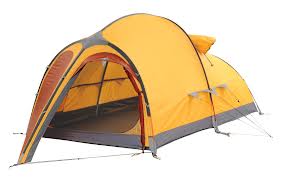
Big, burly, expensive alpine tent that sleeps two


This is your climbing tent, your alpine tent, your “Long Way Round” moto touring tent that packs down small and weighs next to nothing, and the weight-shaving, single-wall design means that it will work best in dry climates or at altitude. It should be a palace for one but a tight squeeze for two people who may need to share body heat in winter. Cross-ventilation is a must.


Family camping tent
Go ahead--bring the kitchen sink


Your off-the-grid hotel room. The joy you’ll get from this tent is, fortunately, inversely proportional to its price. You don’t need to spend a fortune these days for great “car camping” tents that sleep four to six in a pinch (often with two rooms) and deliver luxury accommodation for two on trips where you don’t have to carry their 20-pound bulk to the campsite. Just don’t expect these tents to hold up well in heavy rain or against wind gusts of 25 mph or greater. Always stake them out completely, using guy lines to bolster stability. Look for:
Pockets: more is better

  • High ceilings: can you stand up inside? 
  • Width: will your big, honkin’ air mattress fit with room for you to walk around it? 
  • Two big doors 
  • Gigantic vestibules, front and back, where you can store gear and cook & eat meals in the rain if necessary. Always buy the vestibule, even if it costs extra. These tents are rarely waterproof without the vestibule. 
  • Double windows (netting and fabric) 
  • Roll-back fly for scenic views and “air conditioning” on clear days and nights 
  • Storage: lots of “closet space” and ceiling hooks for lighting and storage 


Winter tent 

Generally the last thing to add to your inventory, this is a 3-4 person tent made for winter camping. Great winter tents are expensive but definitely worth the money. Strength is important, both in the fabric and in the poles. A two-wall design will be heavier to carry but warmer at night, offering the added bonus of more vestibule space. The steep sidewalls are designed to shed snowfall. Make sure you can set up this tent wearing gloves. Make sure the stake loops are big enough for skis. Look for some or all of these extra features:

  • Retro reflective coating so that you can find your tent in a whiteout using a headlamp 
  • Cross-ventilation that lets you cook inside during a storm 
  • Trap door that covers a “sink” beneath the floor 
  • Two big doors that you can open easily with gloves on, and access on both sides of the vestibule 
  • Vestibules that shelter you while your putting on and taking off your boots 
  • Gear loft for drying socks, hats and gloves 


Bivy sack
This bivy sack lets you tie in
from your harness to an anchor


From the lightweight, heat-retaining safety blankets that go in your med kit to sophisticated waterproof/breathable bivy bags that will let you sleep on a ledge while tied in to an anchor, there is a broad array of emergency solo shelters. On my Appalachian Trail trek, I slept in a bivy bag every night to insulate my sleep system from the wet dog who shared my tent. My winter alpine rucksacks have bivy features built-in: foam pads, snow skirts and emergency whistles.

The main point here is that you should always plan for darkness and/or injury when traveling alone off the grid. Buy an affordable solo shelter that you can crawl into and zip up when injured, wet, lost and tired. Make sure it’s roomy enough for your fattest sleeping bag. The most important question to ask yourself about this purchase is: “Will I really carry this in my day pack?” It can’t save your life if it’s not in your rucksack.

Final words of wisdom when building up your tent inventory: Never buy a tent you haven’t set up and struck down yourself. Never buy a tent you don’t love. Proceed slowly, on the lookout for bargains and clearances. And always buy the footprint that goes with the tent—it protects the tent floor.

Time to start logging in some unforgettable nights out!


Saturday, June 29, 2013

Best Clothes Line

Next stop: Spain.
Laundry the old fashioned way

My Napoleonic drama is up for best unproduced screenplay at the Madrid International Film festival. Pretty cool.

So what’s tucked away in my carry-on roller this time? 

The Lite Line Clothesline by Sea to Summit.


This thing changed my life in camp. No more ants in my pants from underwear left to dry on a stump. No more disappearing dish towels, socks, bandanas. No more putting on soaking wet, freezing cold sports bras at six in the morning. No more dew-soaked sleeping bags meant to be airing out while I’m striking camp. 


Now try it the hi-tech way

Face it. The para-cord clothesline has its limits. Wind blows stuff off it. The same wind you need for drying your clothes.

For no extra weight, try this. It’s a 1.3 ounce valet’s assistant with sliding beads that grip your drying items. It sets up easy and sturdy in 30 seconds between any two objects anywhere from 12-20 feet apart. It tightens itself. And it disappears in your luggage or your pack.

Sea to Summit, you’ve done it again. Clever, beautiful gear that works every time.


I have a Lite Line for every traveler in the household.
Lite Line Clothesline by Sea to Summit

So get out there and don’t worry about getting wet. It’ll dry.

Monday, May 6, 2013

Worst Loo Paper

The sales copy says: “Who doesn’t want toilet paper that glows in the dark?”

I don’t, not if it means wiping my bottom with strontium aluminate or zinc sulfide.

This has got to be the most idiotic product ever let loose on the backcountry.

I found out about its existence in the camping/touring issue of BMW ON, the motorrad club's news magazine. Now I worry about the sanity of its editorial staff.

Please, don’t embarrass me. Promise me now you will never, ever go near this roll of loo paper. Or anybody who turns up in camp with it.


Saturday, March 23, 2013

Best Thermos

I'm trying to get used to calling it a vacuum bottle. To me it'll always be a thermos, but the one that outperforms all others in the backcountry happens to be a Nissan.

The Backpack Bottle:
hot grog by Nissan

A Nissan? As in the auto maker? Yep.

On countless winter trips, the Backpack Bottle has stood out as the lightest, most compact way to carry 16 oz of hot drinks. It'll keep your coffee, tea or broth hot all morning in below zero temperatures, and on most days you'll still find it pleasantly warm in late afternoon. Plus, no leaks. It locks.

The beautiful, cupless design is where the thermal efficiency and the weight savings come from. If you plan to share your hot grog, you'll want the Compact Beverage Bottle shown at right.
Don't drink and drive

Carrying a thermos in the backcountry is a luxury many people foolishly forego. I say "foolishly" because I've seen hot drinks revive crap days, injured people and lost travelers better than anything else. But people weigh the thermos, shake their heads and say, "too heavy. Too bulky." Now that there's a Nissan, their excuses are running thin.

Wednesday, March 6, 2013

Most Liveable Tent

I used to be the only mum I knew who’d spend a month living out of a tent. Times’ a changin’.

More of my friends are shipping out to foreign ports (domestic ones too) to recharge and restore themselves in retreat. And more of them are being asked to bring a tent.

So which one works?

The Kingdom 4 by REI. 
I’ve logged 50 nights or so in this one, and it has been the most liveable tent I’ve ever owned.

They make a larger version that “sleeps six.” That’s code for a tad more room for you and your companion. It sounded appealing until I realized that the four-person footprint maxes out the space for most NPS tent platforms.

 What makes this one so liveable, above and beyond all the others?


  • Medium-sized people can stand up and walk around inside this tent 
  • Bright and spacious with great air circulation 
  • Bedroom and sitting room are divided by a curtain 
  • Nice décor and ample, well designed storage 
  • Numerous “ceiling hooks” for hanging lanterns or clothes 
  • Roll-up panels on the rainfly reveal floor-to-ceiling mesh windows and front door; roll them down for privacy and warmth 
  • Two big doors, front and back, each accessible from left or right, with covered storage outside the back door 
  • Cook and eat on rainy days inside the front door, in the foyer-size vestibule 

Very civilized setup.

Even though it isn’t cut or made to the bomber specs of alpine tents, the Kingdom 4 holds up well in heavy gusts. Battens down dry in rainstorms. The fabric quality is good, if not great; the mosquito netting is even better. With two huge windows, one in each room, you definitely feel the cold. But on hot buggy days you couldn’t wish for a breezier hideout.

And it even has that luxury feature every base camp needs: 3M reflectors on the fly, so you can find it when you’re returning home at night with your headlamp on.

Fully deployed at a summer campsite
To get all this functionality, you need to pay attention to details. Buy the vestibule. Buy the footprint. Stake it out at every point, and add guy-lines. It sets up easily, even for one person. Turning it into a home will take the better part of a morning or afternoon on arrival in camp. I block out two hours to strike this camp, too.

If you long for a flush toilet and running water on your getaway, and if your approach allows for driving, you’ll prefer glamping.

The whole scene has come so far in the US over the past few years that we’re nearly European. Check out these four-star trailer interiors on Pinterest.

A railway sleeper car converted into a house. A schoolbus converted into a mobile home. Teak paneled Airstream travel trailers with cozy twin bedrooms handsomer than a ship’s cabin. Tonke campers for flatbed trucks. Eggs, teardrops and Serro-Scottys with beds, galleys and built-in storage. It’s endless. Talk about liveability.

But I can see why people need to spend a month chanting in an Ashram after paying these glamping bills.

Oh, James, behave!

Next you’ll be towing your travel trailer with your Porsche two-seater, the way they do in the Tyrol near Ehrwald, at the foot of the Zugspitze.

And you’ll be catching my eye, of course. But that’s another story.


Sunday, February 24, 2013

Gear Loft Basics

It’s hard enough to find great gear that carries its weight and stands the test of time. It’s a total loss when I do something idiotic that shortens the life of a piece of equipment I rely on.

Experience has taught me not to cut costs or corners in the design phase.

Want (most of) your adventure stuff to last a lifetime or similar?

Here are the top 5 things you absolutely must have before you splurge on pricey merino base layers, a new tent, a rack and a rope or a primo down puffy or sleeping bag.


  1. Front-loading, best quality, large capacity washer with “handwash” and “delicates” settings. 
  2. Dryer: key for reproofing apparel. You must be able to control the heat. 
  3. Well-lit, climate controlled, walk-in space low in humidity. Limit direct sunlight. 
  4. Ample shelving with high clearances for loosely folded tents and sleeping bags stored in cotton bags. Air must circulate freely among all items. Air mattresses (70” plus in length) must be shelved (or hung) open and inflated. 
  5. Room to hang gear including all ropes, runners and jackets (no wire hangars). NEVER store climbing ropes or runners on the ground. Ever. 


And if you dive, you can’t do without a garden hose, spigot attachments and an extra large rubber trash can (100-gallon plus, with lid) for rinsing gear in fresh water.