About a year ago, a motorcyclist returned from her maiden cross-country tour with stars in her eyes. She handed back the tent I’d loaned her (she’d kept it in pristine condition) and told me stories about the highlights of her trip.
The most wondrous nights, by far, were the ones she’d spent camping.
The silence. The solitude. The color. The wide horizon. The pleasures of self-sufficiency. The freedom of the journey, wherever your road takes you.
She was hooked on the backcountry. She started peppering me with questions about trekking, backpacking, climbing, mountaineering, the lot. Finally she worked her way up to the big question, “How many tents do I need?”
That’s the same question my wife just asked me, with our checkbook in hand and a slightly different tone in her voice, after I replaced my old Garuda single-wall solo tent with a new Black Diamond HiLight.
The answer is five tents and a bivy sack, if outdoor adventure is your life’s calling. And if you climb big walls, you’ll need a portaledge—a tent that anchors you to a rock face.
 |
| Romantic portaledge |
 |
| Epic portaledge |
But let’s leave the portaledge for another post.
Five tents and a bivy bag
Build your inventory of tents over time, beginning with your most immediate need for shelter. The first couple of purchases may vary, but here’s the typical order:
Two person, three season backpacking tent
 |
| Two-person tents come in lots of shapes and sizes |
This is the tent you will be spending the most quality time in with another person, so don’t skimp here. Designed to split the weight between two people on backpacking trips, the best tents in this category are not the lightest. They weigh in at about 5-8 pounds. Double wall design gives you weather protection, breathability and ample vestibule storage for your gear so you can enjoy all the space inside. These tents should be strong and comfortable, with all the bells and whistles that make it a pleasure to sit out a storm in spring, summer or fall. Pay attention to details like:
- Length, width and height: are you really comfortable? Can two people sit up and face one another?
- Wall color: is it soothing? Depressing?
 |
It's nice to be able to check
the weather without having to
leave your tent in a storm |
- Fabric and netting pattern on on the ceiling: will condensation roll off or drip onto your face?
- Big, wide doors: two are always better than one
- Ventilation pattern: can you visualize airflow from bottom to top and from one end of the tent to another?
- Fabric windows that cover the mosquito netting and roll back on hot nights
- Skylights in the fly
- lots of handy storage pockets
- Fly that rolls back for stargazing and extra ventilation
- and even gear lofts.
Solo ultralight tent with vestibule
 |
| Mountain Hardware Sprite is my solo summer tent |
This is the tent you take on solo treks and short trips in spring, summer and fall. You may even travel with this tent in your airline luggage, so there is no reason for excess weight or bulk. You will find a lot of variety in this category, so pare down your requirements to the features that are most important to you. Some people want a fee-standing tent at all costs. Some people want the shortest setup time. Others care most about a huge vestibule that keeps their gear dry for an early start, yet still has room to fire up the stove for breakfast from their sleeping bag. Some people need to be able to fully sit up. For others, maximum netting is required for summer trips.
Alpine tent: ultralight, single wall
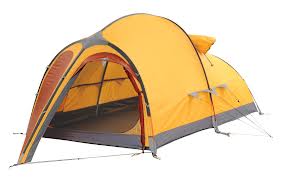 |
| Big, burly, expensive alpine tent that sleeps two |
This is your climbing tent, your alpine tent, your “Long Way Round” moto touring tent that packs down small and weighs next to nothing, and the weight-shaving, single-wall design means that it will work best in dry climates or at altitude. It should be a palace for one but a tight squeeze for two people who may need to share body heat in winter. Cross-ventilation is a must.
Family camping tent
 |
| Go ahead--bring the kitchen sink |
Your off-the-grid hotel room. The joy you’ll get from this tent is, fortunately, inversely proportional to its price. You don’t need to spend a fortune these days for great “car camping” tents that sleep four to six in a pinch (often with two rooms) and deliver luxury accommodation for two on trips where you don’t have to carry their 20-pound bulk to the campsite. Just don’t expect these tents to hold up well in heavy rain or against wind gusts of 25 mph or greater. Always stake them out completely, using guy lines to bolster stability. Look for:
 |
| Pockets: more is better |
- High ceilings: can you stand up inside?
- Width: will your big, honkin’ air mattress fit with room for you to walk around it?
- Two big doors
- Gigantic vestibules, front and back, where you can store gear and cook & eat meals in the rain if necessary. Always buy the vestibule, even if it costs extra. These tents are rarely waterproof without the vestibule.
- Double windows (netting and fabric)
- Roll-back fly for scenic views and “air conditioning” on clear days and nights
- Storage: lots of “closet space” and ceiling hooks for lighting and storage
Winter tent
Generally the last thing to add to your inventory, this is a 3-4 person tent made for winter camping. Great winter tents are expensive but definitely worth the money. Strength is important, both in the fabric and in the poles. A two-wall design will be heavier to carry but warmer at night, offering the added bonus of more vestibule space. The steep sidewalls are designed to shed snowfall. Make sure you can set up this tent wearing gloves. Make sure the stake loops are big enough for skis. Look for some or all of these extra features:
- Retro reflective coating so that you can find your tent in a whiteout using a headlamp
- Cross-ventilation that lets you cook inside during a storm
- Trap door that covers a “sink” beneath the floor
- Two big doors that you can open easily with gloves on, and access on both sides of the vestibule
- Vestibules that shelter you while your putting on and taking off your boots
- Gear loft for drying socks, hats and gloves
Bivy sack
 |
This bivy sack lets you tie in
from your harness to an anchor |
From the lightweight, heat-retaining safety blankets that go in your med kit to sophisticated waterproof/breathable bivy bags that will let you sleep on a ledge while tied in to an anchor, there is a broad array of emergency solo shelters. On my Appalachian Trail trek, I slept in a bivy bag every night to insulate my sleep system from the wet dog who shared my tent. My winter alpine rucksacks have bivy features built-in: foam pads, snow skirts and emergency whistles.
The main point here is that you should always plan for darkness and/or injury when traveling alone off the grid. Buy an affordable solo shelter that you can crawl into and zip up when injured, wet, lost and tired. Make sure it’s roomy enough for your fattest sleeping bag. The most important question to ask yourself about this purchase is: “Will I really carry this in my day pack?” It can’t save your life if it’s not in your rucksack.
Final words of wisdom when building up your tent inventory: Never buy a tent you haven’t set up and struck down yourself. Never buy a tent you don’t love. Proceed slowly, on the lookout for bargains and clearances. And always buy the footprint that goes with the tent—it protects the tent floor.
Time to start logging in some unforgettable nights out!


